

Blog
September 1, 2026
Infrared Sauna and Mitochondrial Health: Understanding the Connection
Explore how infrared sauna, heat exposure, and red light therapy may interact with mitochondrial health, cellular energy production, and adaptation.

If you're navigating perimenopause or menopause, stepping into a warm infrared sauna on purpose might feel counterintuitive. After all, hot flashes and night sweats are the hallmark symptoms of this life stage, affecting an estimated 50–80% of women [1]. They also don't pass quickly. One study suggests that frequent hot flashes and night sweats last for a median of 7.4 years [2].
Women are seeking natural solutions and often ask: is infrared sauna good for menopause and its symptoms? The honest answer is that research is still catching up; women have historically been underrepresented in heat research. A 2026 review of 73 passive heat studies found that fewer than one in three participants were female, and not a single study was designed to compare responses between women and men [3].
Here, we'll unpack what we do know about temperature regulation during menopause and how women's bodies respond to heat. We'll also look at where infrared saunas for menopause may fit within a broader wellness routine.
Perimenopause is the transition leading up to menopause. During this window, which can last several years or more, estrogen and progesterone fluctuate, often unpredictably, before declining. Menopause is officially reached after 12 consecutive months without a period [4].
While hot flashes and night sweats are the most characteristic symptoms, the effects of this hormonal shift reach well beyond temperature regulation to impact both mental and physical health. In one long-term study, women were two to four times more likely to have a major depressive episode during perimenopause or early postmenopause than before it [5].
Many women also notice:
Which symptoms show up, how intense they are, and how long they last varies widely from woman to woman.
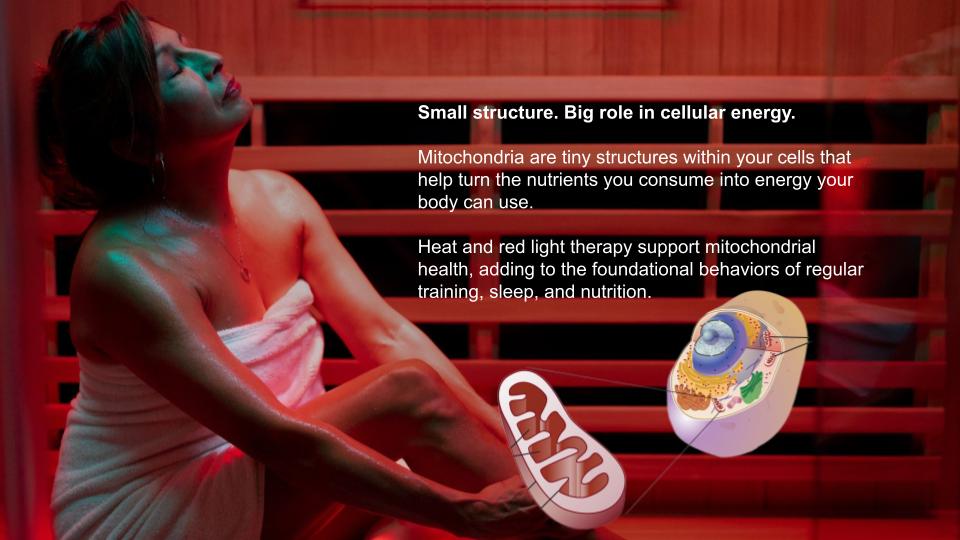
Your body's temperature control system works a lot like a thermostat. A region of the brain called the hypothalamus takes in signals from your skin and core. It keeps your temperature in check by widening blood vessels, sweating, or shivering [1].
Female sex hormones help regulate this system: estrogen supports heat loss, while progesterone raises body temperature [1]. As both shift during the menopause transition, so does temperature regulation.
A hot flash is an exaggerated heat-loss response. Blood vessels in the skin widen, sweating ramps up, and you feel a sudden wave of intense internal heat [8]. The leading explanation centers on KNDy neurons in the hypothalamus. These neurons become overactive when estrogen drops and are thought to switch on heat-loss responses even when the body isn't truly overheated [1, 9]. Some of the strongest support for this idea comes from a placebo-controlled trial of a drug that blocks this pathway. Women taking it had about 19 hot flashes per week, compared with about 49 on placebo [10].
Researchers have also proposed that women with hot flashes have a narrower comfort buffer, so even small rises in core temperature could set one off [11]. Stress may narrow that buffer further, which could help explain why anxiety can trigger hot flashes [8].
Still, core temperature isn't the whole story. Many hot flashes, especially those that happen at rest, aren't preceded by any rise in core temperature at all [12]. Other factors, like higher body mass, smoking, and a sedentary lifestyle, have also been linked to more frequent hot flashes [1].
If hot flashes make you wonder whether your body can still handle heat, the research offers some reassurance. One small study found that postmenopausal women (ages 52–62) sweated less and stored more heat than younger women during exercise in hot conditions [13]. But newer research suggests that age, rather than menopause itself, may be the bigger driver.
In a 2026 study presented at the American Physiology Summit, middle-aged women's skin blood flow and sweating responses kicked in later during passive heating than those of young women. There was no difference, however, between women who were late premenopausal and those who were early postmenopausal [14]. Similarly, another study found that the core temperature at which sweating began was similar in pre- and postmenopausal women [12].
In other words, women in midlife can still regulate their temperature in the heat. Their cooling responses may just start a little later than they did in their twenties. To date, there's little evidence that menopausal women are unable to regulate core temperature when exposed to environmental heat [15].
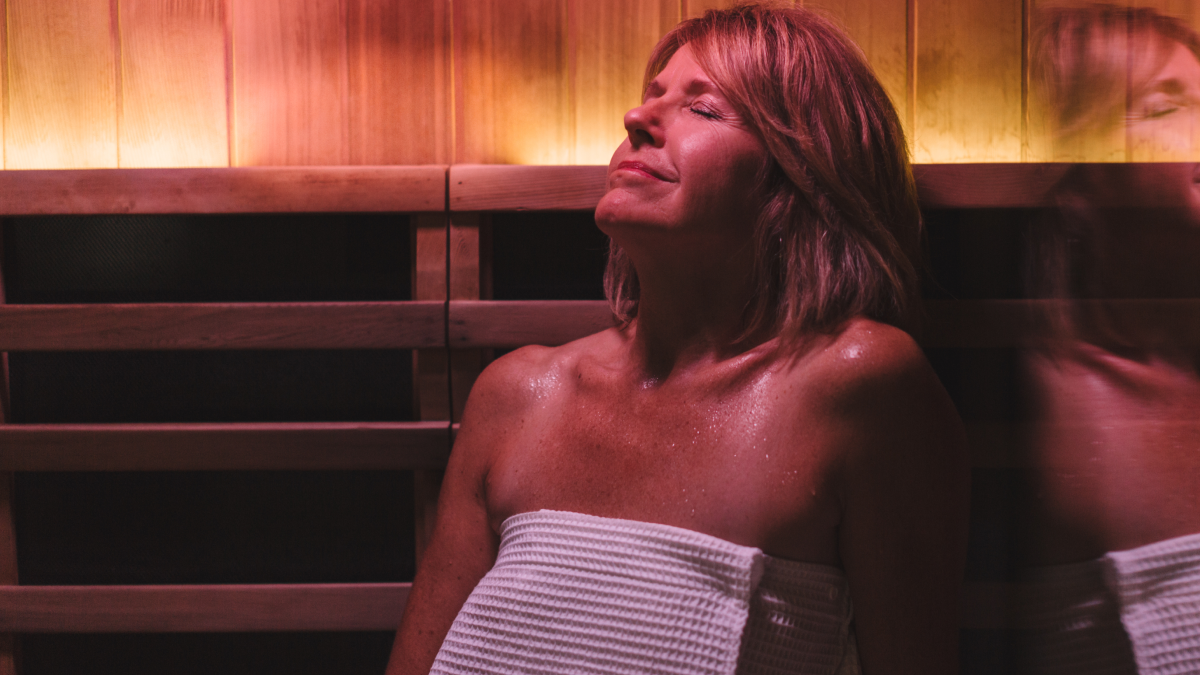
One of the strongest clues comes from exercise research. In a 16-week study of 21 women, those who completed supervised exercise training reported significantly fewer hot flashes than a control group [16]. Their bodies also began sweating and increasing skin blood flow earlier as core temperature rose. In other words, their internal cooling system became more responsive.
Repeated heat exposure can produce similar adaptations, although most of that research has been done in men [3]. That's why scientists have hypothesized that regular heat therapy may help with hot flashes over time. The potential benefit is long-term adaptation, not relief in the moment. In the short term, heat can trigger a hot flash.
Direct evidence on sauna and menopause is limited, but promising. In a small randomized trial, 22 postmenopausal women received far-infrared therapy on their backs for about 20 minutes, twice a week for 10 weeks. They reported significant reductions in menopause-related symptoms, including hot flash-related, musculoskeletal, and psychological symptoms, while the untreated control group saw no change [17]. Estrogen levels and bone density didn't change.
The study had some limitations: it used localized infrared heat rather than a whole-body sauna, it had no placebo condition, and symptoms were self-reported. Still, the findings are encouraging, and researchers are calling for more studies designed specifically for women to understand who benefits most from heat therapy and how [3].
Up to half of women report sleep problems in midlife [18]. Night sweats play a role, but they don't explain all of it. Hormonal shifts, stress, and other factors can disrupt sleep, too [8]. And sleep matters well beyond feeling rested. In one long-term study, persistent insomnia across midlife was linked to a 71% higher risk of cardiovascular disease events [18].
Heat, timed well, may help. A meta-analysis found that warming the body with a bath or shower 1–2 hours before bed helped people fall asleep faster and improved sleep quality. The likely reason is that warming enhances the natural drop in core temperature that signals your body it's time to rest [19]. These studies used water-based heating and weren't specific to menopause, but the same principle is one reason many people find an evening infrared session helps them wind down. (More on natural ways to improve sleep here.)
Heart disease is the leading cause of death in women [18], and menopause is an important window for heart health. Hot flashes may be more than an inconvenience. Research suggests that women whose frequent hot flashes persisted over time had a 77% higher risk of later cardiovascular events, leading the study’s authors to suggest hot flashes may be a female-specific heart health risk factor [20].
Regular sauna use has been associated with better heart health. In a 15-year study of more than 1,600 middle-aged and older adults, over half of them women, those who used a sauna 4–7 times per week had a significantly lower risk of dying from cardiovascular disease than those who went once a week [21]. This research was observational and conducted in traditional Finnish saunas, but it supports making heat therapy a consistent part of a heart-healthy routine.
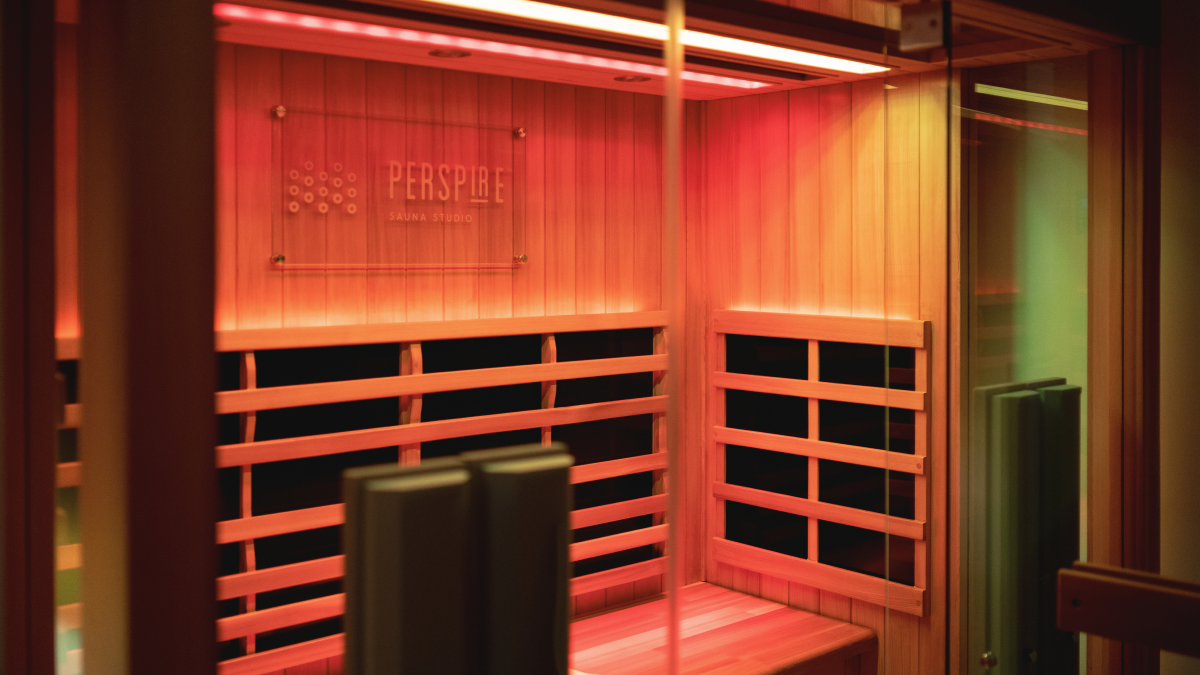
For most healthy women, yes. Infrared saunas warm the body directly at lower air temperatures than traditional saunas, which many women may find more comfortable. Just know that heat can bring on a hot flash in the moment. A few tips can help you get the most from your sessions:
At Perspire, private suites let you personalize your session to your comfort, with integrated red light therapy. At select locations, you can also cool down afterward with contrast therapy. Heat therapy works best as one part of a broader routine that includes regular exercise (especially strength training), nutrient-dense eating, and stress management.
Disclaimer: The content in this article is for educational purposes only and is not intended to replace medical advice, diagnosis, or treatment. If you have a medical condition or questions about incorporating infrared sauna into your wellness routine, consult your healthcare provider before getting started.

Your intro session is up to 50% off — a private suite with full-spectrum infrared heat, red light therapy, and personalized enhancements to suit your wellness journey.