Imagine waking up each morning feeling refreshed, well-rested, and energized to tackle the day ahead. With sleep disruptions like tons of screen time, loads of stress and responsibility, and a never-ending to-do list, this feels out of reach for so many of us. Research shows that poor sleep isn’t just about feeling groggy the next day — over the long-term, poor sleep impacts everything from cognitive function to heart health and immune resilience [1].
So, why are so many people struggling to get quality sleep, and what can be done to improve sleep naturally? Before we explore solutions, let’s take a closer look at the current state of sleep — how well (or not) we’re sleeping, and why it matters more than we might think.
The State of Sleep
Sleep is a vital component of overall health and well-being. Experts suggest that adults should aim for at least 7–9 hours of sleep each night; yet, nearly one-third of adults in the U.S. are falling short — contributing to a national "sleep debt” [1]. In addition to negatively impacting individuals, lack of sufficient sleep also carries a high economic burden, with sleep-related productivity losses and health care costs estimated at $299 billion to $433 billion in the U.S. alone in 2020 [2]. People aren’t just aware of their sleep struggles — they’re actively looking for solutions, through improved sleep hygiene, use of recovery tools, and investment in relaxation therapies [3].
Dr. Brittany Leboeuf, health scientist and physiologist, explains that “sleep is essential for optimal hormone function, weight loss, mood regulation and exercise performance.” The American Heart Association (AHA) agrees, having recently added ‘Getting Healthy Sleep’ to its Essential 8 — a set of key health behaviors for longevity and disease prevention [4]. According to the AHA, adequate sleep helps:
- Support healing and physical recovery
- Improve brain function, cognition, and mental clarity
- Reduce the risk of chronic diseases like heart disease and diabetes
Prioritizing sleep can also have positive impacts on stress and mood. Importantly, the relationship between stress and sleep is bidirectional — high stress levels disrupt sleep, and poor sleep increases stress levels [5]. Improving sleep quality can improve your mood, enhance emotional resilience, and help you more effectively manage stress. Sleep is also essential for fitness adaptations and peak performance. It plays a critical role in muscle repair, recovery, and growth, helping the body adapt to training while reducing the risk of injury and fatigue [6]. Plus, you have more energy to perform well in workouts when you’re well-rested.
Here’s the catch: the amount of sleep you’re getting each night isn’t the only factor at play. Sleep quality — the overall effectiveness and restfulness of your sleep — matters a lot, too, explains Dr. Leboeuf. “Many uncontrollable factors may influence how much sleep someone is getting — like health conditions and family dynamics — but people tend to have much more control when it comes to quality sleep,” she says.
Sleep Hygiene: Small Changes Can Improve Sleep Quality
While sleep is essential for overall health, many people unknowingly engage in habits that disrupt their natural sleep cycles. Sleep hygiene refers to the daily behaviors and routines that promote consistent, high-quality sleep. Research shows that optimizing these habits can enhance cognitive function, emotional well-being, and long-term health [7].
To help you reset your sleep routine, here are six science-backed strategies for better rest [8]:
- Stick to a consistent schedule: Go to bed and wake up at the same time every day, even on weekends, to regulate your body’s internal clock.
- Create a sleep-friendly environment: Keep your bedroom cool, dark, and quiet to reduce distractions and optimize sleep conditions.
- Limit screen time before bed: Avoid blue light from phones, tablets, and TVs at least an hour before sleep, as it may disrupt melatonin production, says Dr. Leboeuf. She recommends “charging your devices in another room to help create a better sleep environment.”
- Relax before bed: Engage in calming activities, like reading, journaling, or using an infrared sauna, to help your body and mind transition into rest mode.
- Stay active during the day: Regular physical activity supports better sleep, but try to finish intense workouts at least a few hours before bedtime.
- Manage your stress: Tools like mindfulness, time spent in an infrared sauna, or a SNO shower to elevate your mood may help you manage your stress, helping you sleep a bit easier.
3 Science-Backed Modalities to Improve your Sleep
Perspire offers three key modalities - infrared saunas, red light therapy, and cold therapy - that can help you improve sleep quality and enhance your ability to rest and recover. Let’s take a closer look at how each therapy helps you reset to feel rested.
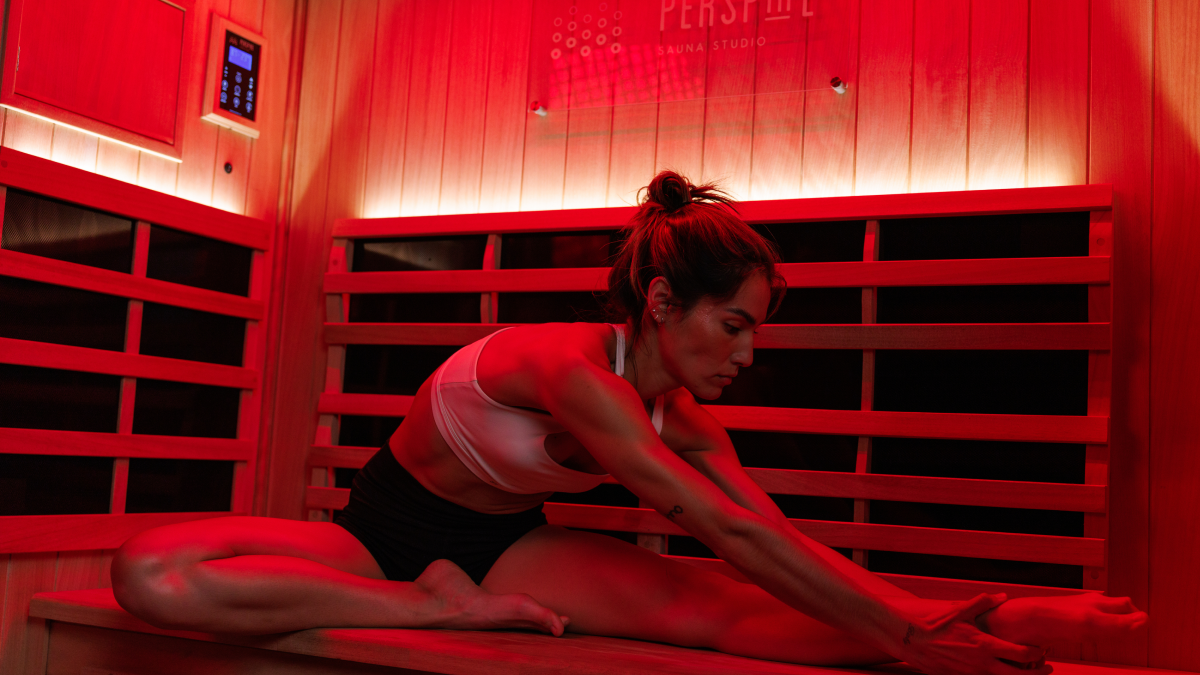
- Infrared Saunas: Evidence has long shown that passive heating - such as warm baths or showers taken 1-2 hours before bedtime - can enhance sleep quality by promoting relaxation and helping your body shift to a restful state [9]. More recent evidence suggests that heat exposure from a sauna may help promote melatonin production, the hormone that our bodies naturally make to help us fall asleep [10]. Additionally, saunas aid in thermoregulation, as the body works to cool down post-session, mimicking the natural temperature drop that signals bedtime to our brains and bodies. Plus, spending time in the sauna promotes deep relaxation, reducing both mental and physical tension that can interfere with sleep. A sauna survey from 2019 reported that 83.5% of regular sauna users noticed improved sleep for 1–2 nights after a session [11].
- Red Light Therapy: Unlike blue light, which may suppress melatonin and disrupt sleep, red light therapy (RLT) has minimal interference with the body’s natural sleep-wake cycle. Emerging research on RLT and sleep suggests some promising benefits. One study found that athletes exposed to RLT had better sleep quality, which is a key factor in exercise performance [12]. Another study highlighted the potential for RLT to help individuals suffering from insomnia, likely due to its ability to reduce stress and promote relaxation [13]. By promoting relaxation and helping regulate circadian rhythms, RLT may complement a broader wellness routine aimed at improving sleep quality. During your next infrared sauna session at Perspire, be sure to take advantage of our proprietary red light therapy (RLT) panels — combining these two powerful therapies is an efficient way to support better sleep and overall relaxation.
- SNØ Showers & Contrast Therapy: While SNØ showers may not directly improve sleep quality, they offer mood and mental health benefits that can indirectly support better sleep habits. Research indicates that cold exposure can increase the release of neurotransmitters like dopamine and norepinephrine, which improve mood and enhance mental clarity [14]. This uplift in mood may reduce stress and anxiety, common barriers to good sleep. Cold showers are known to increase alertness. For this reason, they are best utilized earlier in the day or post-exercise, rather than immediately before bedtime, to avoid interfering with the relaxation necessary for quality sleep.
Key Takeaways
Ready to reset your sleep? Your next Perspire Sauna Studio session could be the perfect place to start.
- Sleep is foundational for health, influencing everything from stress levels to cognitive function and athletic recovery. In addition to the duration of sleep being important - striving for 7-9 hours each night - sleep quality matters, too.
- Sleep hygiene tips, like sticking to a consistent bedtime and winding down before bed, can improve your sleep quality.
- Science-backed recovery tools like infrared sauna, red light therapy, and cold therapy can also help optimize your rest naturally.
- By incorporating Perspire’s modalities into your routine, you can promote relaxation, regulate your sleep cycle, and wake up feeling more refreshed.
Find a location near you, today, and start your journey toward better sleep!
References:
- Centers for Disease Control & Prevention (Sleep)
- American Academy of Sleep Medicine
- McKinsey & Company: 2024 Wellness Trends
- American Heart Association Life’s Essential 8
- Division of Sleep Medicine (Harvard): Sleep and Mood
- National Sleep Foundation: Sleep Affects Athletic Performance
- National Sleep Foundation: Sleep Hygiene
- Hirohama et al., 2024
- Dorsey et. al., 1996
- Laukkanen et al. 2024
- Hussain et al. 2019
- Zhoa et al. 2012
- Pan et al. 2023
- The Cleveland Clinic: Cold Plunges