


Blog
September 1, 2026
Infrared Sauna and Mitochondrial Health: Understanding the Connection
Explore how infrared sauna, heat exposure, and red light therapy may interact with mitochondrial health, cellular energy production, and adaptation.

The most impactful health behaviors are the ones you can repeat. From a daily walk after dinner to twice-weekly infrared sauna sessions, small actions add up over time.
Decades of science suggest this same principle applies to heat therapy, too [1]. Here, we explore why consistency matters, how habits are built, and how Perspire is designed to support wellness rituals that last.
Brain health is often defined by long-term outcomes, including memory, cognitive decline, or conditions like Alzheimer’s disease. These outcomes matter, and we’ll come back to them. But brain health is also something you experience every day, and something you can influence over time.
It shows up in how you focus, how you manage stress, how well you sleep, and how you move through your environment. And increasingly, research suggests that many of the factors that shape long-term brain health are the same ones influencing how you feel and function right now.
At a physiological level, the brain is deeply connected to the rest of the body. It relies on a constant supply of oxygen and nutrients, is highly sensitive to inflammation, and is directly influenced by the state of the nervous system [1].
That means brain health isn’t isolated. It’s shaped by broader, whole-body processes. At the same time, modern life introduces a number of challenges to these systems.
Chronic stress, poor sleep, and low levels of physical recovery can all disrupt how the body regulates inflammation, circulation, and stress responses over time. And while these changes may feel subtle day to day, they can accumulate, affecting both immediate function and long-term brain health.
One way to support these systems is through controlled physiological inputs the body can adapt to over time.
Heat exposure, like full spectrum infrared sauna, temporarily increases circulation, cardiovascular demand, and thermal load [2]. With consistent exposure, these inputs may help support how the body regulates the systems the brain depends on.
This article explores the science behind these adaptations—focusing on how infrared sauna may support brain health, and how additional modalities can complement that approach within a consistent ritual.
Research on sauna bathing has linked more frequent use to a lower risk of cardiovascular and neurocognitive diseases, including Alzheimer’s and dementia [3].
While these findings don’t point to a single mechanism, they highlight an important idea: the systems that support cardiovascular health are closely tied to how the brain functions and ages over time.
So how does infrared sauna fit into this? Let’s unpack four potential mechanisms.
The brain relies on a constant supply of oxygen and nutrients delivered through the vascular system.
During heat exposure, blood vessels dilate and heart rate increases, supporting greater circulation throughout the body. These responses can resemble the cardiovascular demands of moderate physical activity, even in the absence of movement [2].
Over time, repeated exposure to heat may support vascular function, an important factor in maintaining consistent blood flow to the brain. This matters because circulation plays a key role in delivering the resources the brain needs while also supporting the removal of metabolic byproducts.
Because vascular health and brain health are closely linked, this is one of the more established pathways connecting sauna use to long-term cognitive outcomes [3, 4].
The nervous system plays a central role in how the body responds to stress, and how it recovers from it [5].
Infrared sauna introduces a controlled physiological stressor. Heart rate rises, body temperature increases, and the body activates systems designed to maintain internal balance [2]. Following your infrared sauna session, the body’s systems work to return to baseline.
With repeated exposure, this pattern of stress and recovery may help support autonomic nervous system regulation, improving the body’s ability to shift between “fight-or-flight” and “rest-and-restore” states.
Because chronic stress and dysregulated stress responses are linked to both immediate cognitive function and long-term brain health, this adaptability may be one of the more meaningful connections between sauna use and how the brain performs over time.
Inflammation is a key factor in how the brain functions and ages [6].
While short-term inflammation is part of a normal immune response, chronic, low-grade inflammation has been associated with a range of long-term health outcomes, including neurodegenerative disease [6, 7].
Consistent heat exposure has been shown to influence inflammatory signaling, with some evidence suggesting reductions in systemic inflammatory markers over time. While these effects occur at the whole-body level, they are still relevant to the brain, which is highly sensitive to inflammatory changes.
By supporting how the body regulates inflammation, consistent heat exposure may play a role in the broader systems that influence brain health over time.
Beyond circulation and inflammation, there is growing interest in how heat exposure may influence pathways related to brain adaptation.
One of these is brain-derived neurotrophic factor (BDNF), a protein involved in learning, memory, and the growth and survival of neurons [8]. The strongest and most consistent evidence for increasing BDNF comes from exercise, making movement one of the most important inputs for long-term brain health [9].
Emerging research suggests that heat exposure may activate similar cellular stress responses, potentially influencing pathways associated with neuroplasticity [2]. This area is still developing, but it reinforces a broader concept: the brain responds to repeated, controlled stressors in ways that may support its ability to adapt over time.
Viewing sauna use as something that can be layered alongside structured exercise may be a key consideration.
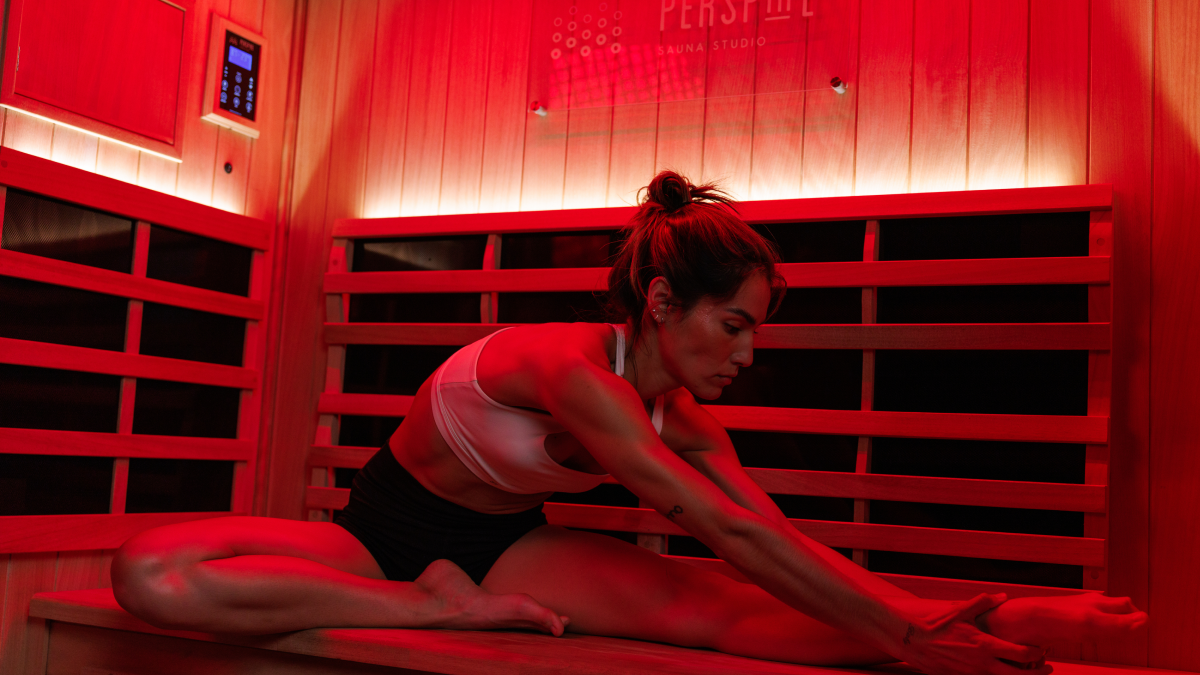
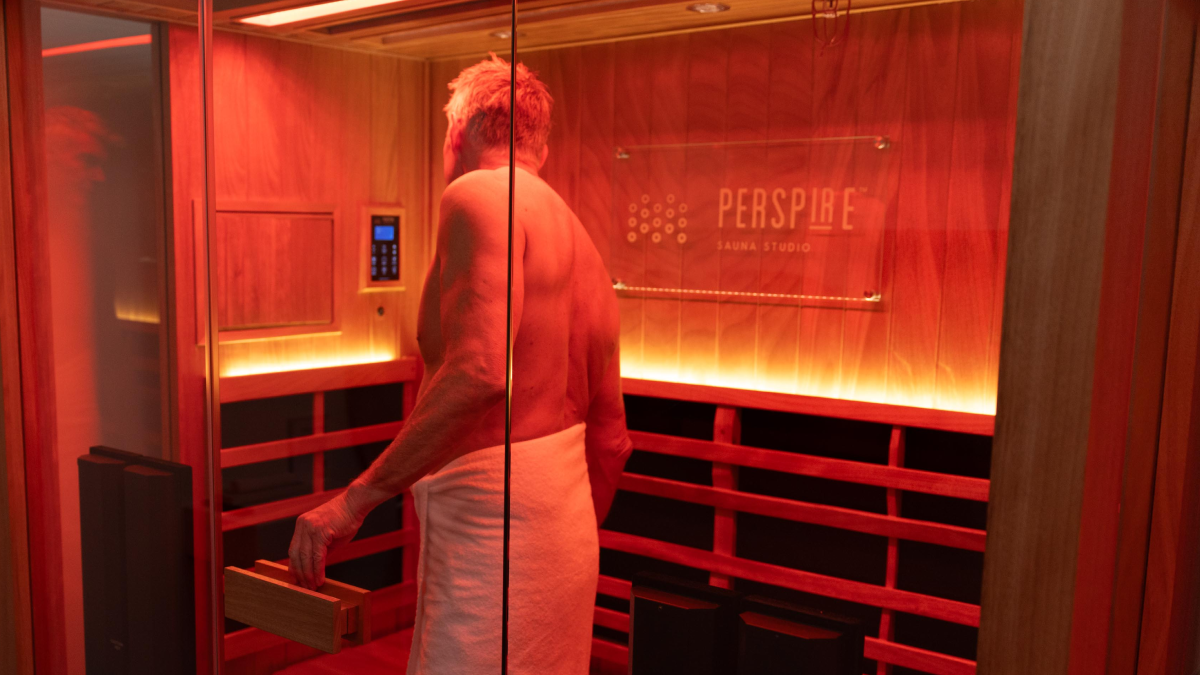
Infrared sauna sessions at Perspire can be customized with both during session red light therapy and contrast therapy, modalities that introduce different physiological inputs.
While their direct effects on brain health are still being studied, both may influence key systems the brain depends on, including cellular energy production and stress response.
At Perspire, contrast therapy is structured as a progression from heat to cold, ending with a cold exposure through our proprietary SNØ shower.
After infrared heat promotes vasodilation and increased circulation, the transition to cold exposure (around 45°F) triggers vasoconstriction. This rapid shift requires the vascular system to adjust quickly, regulating blood flow and maintaining internal balance.
This sequence also introduces a controlled physiological stressor. Heat elevates heart rate and body temperature, while cold exposure activates the nervous system in a different way—engaging pathways associated with alertness and stress response [11]. The body then works to return to baseline.
Over time, this repeated heat-to-cold pattern may support vascular responsiveness and autonomic nervous system regulation, two systems closely tied to circulation and stress adaptation. While direct effects on brain health are still being studied, these mechanisms align with pathways that influence how the brain functions over time.
Red light therapy works by delivering specific wavelengths of light that are absorbed by mitochondria, the structures within cells responsible for producing energy [12].
This interaction is thought to support mitochondrial function and efficiency, which plays a role in how cells perform and recover. Because the brain is highly energy-dependent, these pathways are of growing interest in the context of cognitive function and overall brain health.
Some research suggests red and near-infrared light may influence cellular signaling and metabolic activity in certain groups of people (like those recovering from stroke) [13], though much of this work is still emerging, particularly in humans.
When layered alongside heat exposure, red light therapy may help support cellular processes that contribute to how the body, and the brain, functions over time.
Disclaimer: The information presented here is for general educational purposes only and should not be considered as medical advice. Please consult your healthcare provider with any individualized questions.
References

Your intro session is up to 50% off — a private suite with full-spectrum infrared heat, red light therapy, and personalized enhancements to suit your wellness journey.