
Blog
September 1, 2026
Infrared Sauna and Mitochondrial Health: Understanding the Connection
Explore how infrared sauna, heat exposure, and red light therapy may interact with mitochondrial health, cellular energy production, and adaptation.
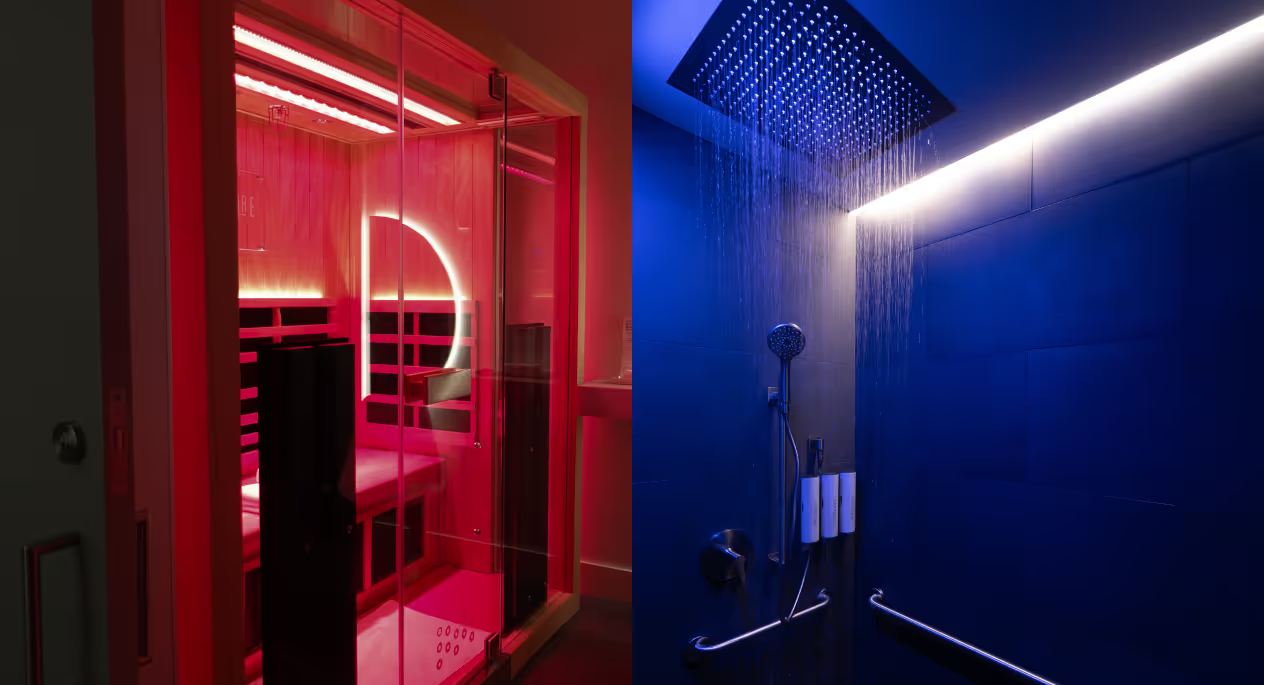
Alternating between heat and cold is more than a wellness trend; it’s a science-backed way to boost energy + mood, recharge + recover, and (temporarily) ignite your metabolism. Perspire Sauna Studio’s SNØ Showers offer a refreshing final step in your wellness ritual—a proprietary 45-second, 45°F cold rainfall experience designed to follow your infrared sauna + red light therapy session.
Known as contrast therapy, this hot-to-cold exposure activates your circulatory system, stimulates endorphin release, and helps reduce inflammation. A powerful reset that supports your body’s natural resilience—so you leave each session feeling recharged, focused, and ready to take on your day.

But what’s really happening inside the body when you alternate between hot and cold? And, who is contrast therapy best for? We asked exercise physiologist, Dr. Brittany Lebeouf, to break down the science.
Ask an Expert: Infrared Sauna + SNØ Showers
Q: How does cold therapy work?
A: When you expose your body to cold therapy, like a 45°F SNØ Shower, it causes your blood vessels to constrict (a process called vasoconstriction), which helps reduce inflammation and redirects blood to your core which protects vital organs. Once you warm up again, those same blood vessels dilate (called vasodilation), sending oxygen-rich blood back to your muscles and tissues.
This cycle supports improved circulation, speeds up some elements of recovery, and can even boost your mood by activating the release of endorphins and norepinephrine (the feel-good hormones in the brain) [1].
Q: What is contrast therapy, and how is it different from cold therapy alone?
A: Think of contrast therapy as deliberately going from heat therapy (like a sauna) to cold therapy (like SNØ). This quick switch in modalities changes your core body temperature and impacts several systems of your body—causing your blood vessels to rapidly expand and contract, neurotransmitters to be released, and more. Contrast therapy uses both temperature extremes, while cold therapy uses only sustained cooling.
Q: Do studies support the use of cold therapy for post-workout recovery?
A: Actually, a lot of the emerging research we have on contrast therapy stems from the physical therapy, athletic training, and exercise science spaces. Some studies have found that alternating between hot and cold water can ease muscle soreness and maintain strength after tough exercise bouts in young adults [2, 3]. There are also studies looking at contrast therapy for reducing muscle and joint pain and discomfort in adults [4].

“There are also studies looking at contrast therapy for reducing muscle and joint pain and discomfort in adults.”
Based on the evidence we have to date, there’s one important consideration to keep in mind: Recent studies suggest it’s best to avoid cold therapy soon after resistance training [5, 6]. That’s because cold exposure may blunt some of the inflammation your body needs to trigger muscle growth and strength gains. So, if you’re following a strength-training program and also love contrast therapy, save the cold therapy addition for your off-days, and opt for infrared sauna + red light therapy on training days instead.
Q: Talk to us about the mood benefits of contrast therapy.
A: As mentioned previously, a lot of the research we have to date on contrast therapy comes from exercise science researchers, as well as researchers in adjacent fields. As such, many studies do not focus primarily on mood, but sometimes include it as a secondary outcome. The research on contrast therapy and mood is still emerging, but there is evidence that each modality (heat and cold exposure) positively impacts mood.
Cold Therapy: There is evidence that cold therapy exposure can acutely improve mood by stimulating the release of dopamine, serotonin, and norepinephrine, which are neurotransmitters that impact the brain and behavior [7].
Heat Therapy: Heat exposure improves mood by stimulating the release of endorphins, which promotes relaxation and emotional well-being. Some studies suggest that regular heat exposure can enhance sleep quality, which supports mood regulation as well [8]. Read more on that here.

Q: Is there anyone who should chat with their doctor before adding contrast therapy to their wellness routine?
A: Most people can safely enjoy contrast therapy, especially when it’s being done in a smart and science-guided way. That said, if you have any specific health concerns, specifically related to heart health, blood pressure, or circulation, it’s a good idea to talk with your healthcare provider first. Contrast therapy works by shifting your blood flow and temperature regulation significantly, so additional caution is warranted.
Pregnant women should also avoid both heat and cold therapy until they are medically cleared post-delivery, as exposure to extreme temperatures can impact core body temperature and circulation in ways that may not be safe during pregnancy [9].
Q: What advice do you have for someone trying contrast therapy for the first time?
A: Start slow and stay curious. Your first contrast therapy experience, especially the SNØ portion, will feel intense, but that’s completely normal. The key is to focus on your breathing and remember that this is a temporary situation. Plus, you can step out of the water stream at any point—you don’t have to stay in there for the full 45-seconds your first time. Work your way up to the full time limit over weeks or months if you need to.
Q: Have you tried contrast therapy before yourself? Any expert tips?
A: I have only tried contrast therapy once, but not for lack of interest! I have been pregnant or nursing much of the last 6 years, so I’ve had limited opportunities to engage safely. When I did try it, I enjoyed it, but can only speak to the experience acutely rather than chronically. I did observe an anecdotal mood boost. I am typically a bigger fan of heat exposure compared to cold exposure, so focusing on breathing through the cold exposure helped a lot. Afterwards, I did feel quite euphoric — similar to how I feel after a good workout.
Putting Contrast Therapy Into Practice
SNØ Showers are the perfect cold finish to your infrared sauna session, offering an invigorating contrast therapy experience, backed by science. When practiced consistently, contrast therapy becomes more than just a moment of relief—it becomes part of your long-term health ritual.
“Adding any new wellness behavior to your routine is an investment,” says Dr. Lebeouf. “Your daily decisions, including how you move, recover, eat, and rest, add up over time. It’s not about being perfect; it’s about building habits that support long-term vitality. Practices like contrast therapy are one piece of a bigger picture when it comes to whole-body wellness.”
Complement the warmth of an infrared sauna with the cold of a SNØ Shower. Book your next session at a location near you today!

References

Your intro session is up to 50% off — a private suite with full-spectrum infrared heat, red light therapy, and personalized enhancements to suit your wellness journey.