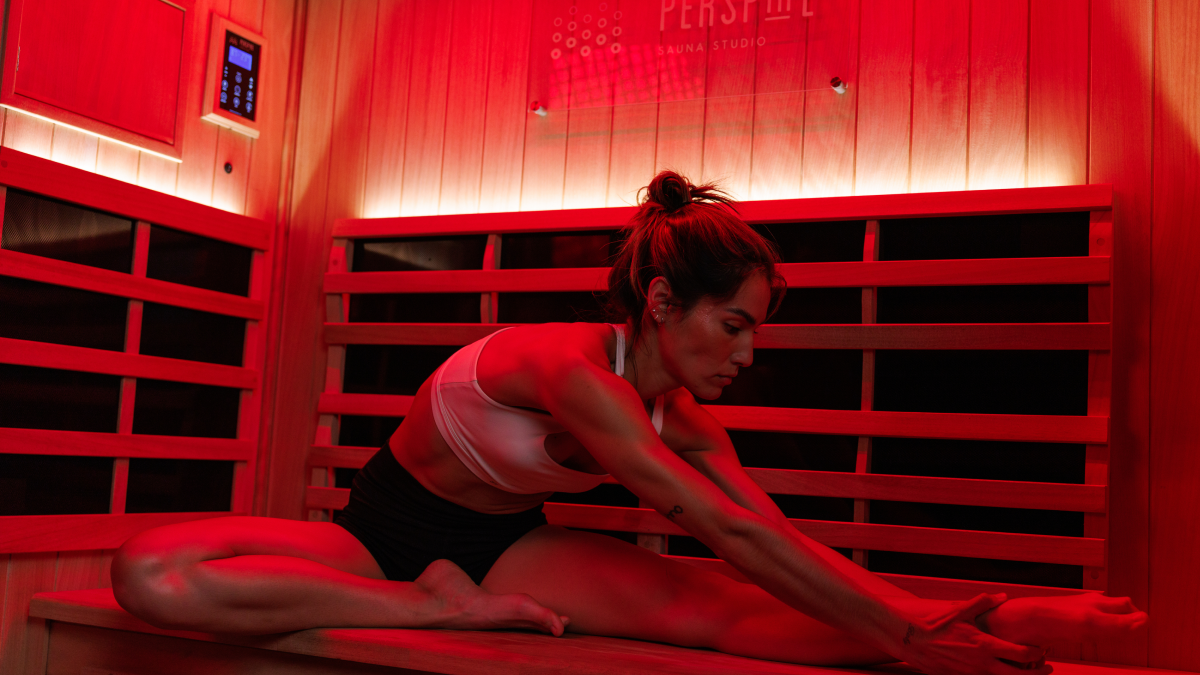
Sauna is a form of passive heat stress, so let’s start by discussing heat stress and its impacts on the body, both short-term and long-term. Understanding the basics of the body’s response to heat stress is crucial, as it explains why and how regular sauna sessions at Perspire Sauna Studio can improve so many aspects of your health and well-being.
During a single sauna session, your core body temperature begins to increase, which initiates a host of responses from your cardiovascular and endocrine systems. As your body works hard to regulate its temperature, you will experience an elevated heart rate, increased cardiac output, blood flow redistribution and changes in your circulation, and initiation of the sweat response. In many ways, research suggests that this response to heat stress mimics the way your body manages moderate physical activity, like a brisk walk.
Over time and with consistency, your body becomes more efficient at managing the heat stress well, and this is often referred to as heat acclimation. This adaptation process has been linked to long-term health benefits, including improved resting blood pressure, improved vascular compliance, lower risk of cardiovascular disease, reduced risk of cognitive decline, and ultimately, improvements in healthspan.
So, what exactly are the differences between an infrared sauna and a traditional sauna? Read below to better understand the top three differences between infrared sauna and traditional saunas.
- Heat Source: Traditional or Finnish style saunas heat the air with conventional heaters. Conventional heaters warm the air to a high temperature, often ranging from 160°F to 200°F, and the heat of the air then transfers to the body. The skin heats up first, and then the core body temperature elevates. In contrast, infrared heaters emit infrared wavelengths, a type of thermal radiation, which heat the body directly in typically cooler air temperatures (ranging widely from 110°F to 170°F). Infrared wavelengths can penetrate the skin and soft tissue, elevating the core body temperature more directly than conventional heaters, all at a more comfortable air temperature.
- Humidity: Saunas are typically categorized as either dry (low relative humidity of <20%) or wet. In Finland, it is common to pour water on hot rocks inside of the sauna to increase relative humidity a bit. Steam saunas have the highest humidity levels (~50% relative humidity) and can significantly impair sweat evaporation, making it harder for your body to thermoregulate. Our full-spectrum infrared saunas are categorized as dry saunas, with low levels of relative humidity.
- Full Spectrum Infrared Wavelengths: Perspire Sauna Studio uses Clearlight’s full spectrum infrared saunas, offering near- mid- and far-infrared wavelengths from the comfort of your private infrared sauna suite. According to Clearlight, “the air temperature is less important than the quality of the infrared heat.” Infrared wavelengths penetrate the skin and soft tissue, heating up the body from the inside out, while also promoting cellular regeneration and increasing blood flow.
If you’re new to using the infrared sauna, rest assured our Perspire Sauna Studio teams are ready to walk you through an unmatched first session experience. Check out four best practices below to enhance your first infrared session:
- Start low and slow, progressing over time. Our infrared saunas are typically set to about 130°F, and you are welcome to adjust the temperature a bit lower for your first session. You will start to feel your core temperature heating up around 10-15 minutes into the session, and we recommend spending no longer than 25-30 minutes in the infrared sauna your first several sessions, evaluating how you feel each 5 minutes or so.
- Listen to the feedback from your body. You know your body best, so make adjustments as needed throughout your session! This may include adjusting the temperature and/or duration of your session. It may also include stepping out of your infrared sauna and into your private suite room to cool off a bit mid-session.
- Hydrate before your session and bring water with you. As your core body temperature elevates, you’ll notice that your heart rate increases, you’re breathing a bit heavier, and your sweat rate increases - all in an effort to keep your cardiovascular system cool. Stay hydrated by bringing a water bottle with you into your suite, and make sure to rehydrate and replenish electrolytes after the session.
- Chat with your doctor. While Perspire Sauna Studio services and modalities are generally safe for most adults, we do recommend reaching out to your medical provider with any questions specific to your medical conditions. You can also learn more about contraindications to infrared sauna use on our website.
Infrared saunas offer both short-term (how you feel after one session) and long-term (benefits you notice after consistent use over time) health benefits, all at a more comfortable ambient air temperature and humidity level than traditional saunas. Experience the gentle heat for yourself by booking your first session at a Perspire Sauna Studio near you today!