Consumers today are turning to Perspire for science-backed solutions that truly improve quality of life and extend healthspan. This shift from quick fixes to a proactive approach signals a focus on long-term, preventative wellness practices supported by real evidence. As the wellness landscape evolves, prevention and longevity are becoming top priorities, with consumers seeking modalities that combine relaxation with measurable results.
Accessible, evidence-based self-care is central to Perspire’s mission–where every member and guest leaves better than they came, mentally and physically. Here, we’ll unpack what infrared saunas are, how they work, and how consistent use supports both the body and mind for long-term health.
What Happens in your Body during an Infrared Sauna Session
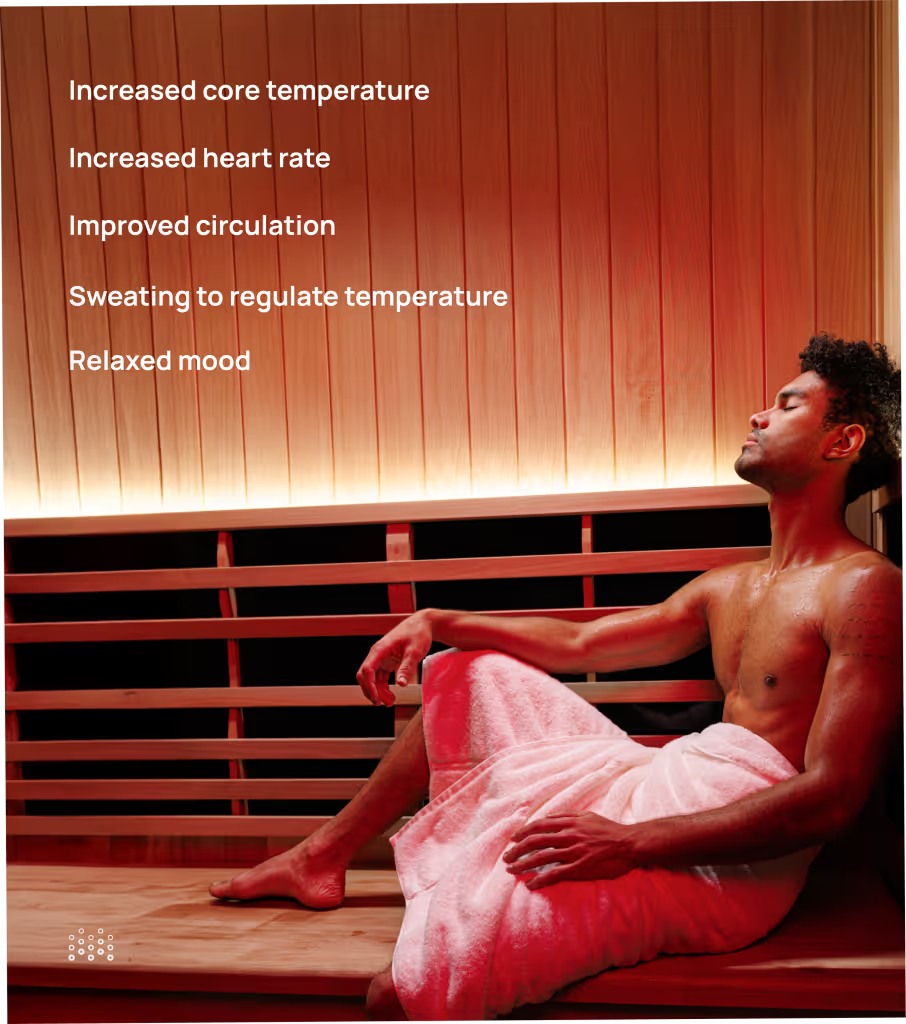
When you step into a full-spectrum infrared sauna, several physiological processes begin almost right away. Your core body temperature begins to rise, triggering increased circulation and vasodilation (widening of your blood vessels) to dissipate heat and maintain homeostasis (balance). Additionally, the nervous system shifts, moving away from the sympathetic state (fight or flight) to the parasympathetic state (rest and digest). This shift can promote relaxation and changes to mood and stress levels.
What Makes Infrared Saunas Different
An infrared sauna uses specific wavelengths from the electromagnetic spectrum, including near-, mid- and far-infrared wavelengths, to generate heat. These wavelengths are invisible to the naked eye but penetrate beneath the skin’s surface, gently warming the body from within.
Unlike a traditional sauna, which heats the surrounding air, infrared technology heats the body directly, creating a more efficient rise in core temperature at lower ambient heat levels. For example, infrared saunas may range from 113°F to 160°F, while traditional saunas tend to run much hotter from 158°F to 194°F [1]; but, both methods can increase your core body temperature. Infrared saunas create a comfortable yet deeply therapeutic experience that promotes circulation, recovery, and relaxation.
By eliminating the harmful ultraviolet (UV) light and utilizing beneficial infrared wavelengths, Clearlight’s full spectrum infrared technology provides a gentle yet powerful thermal stimulus to support whole-body health. Now that we’ve covered how infrared saunas work, let’s explore what that means for your health–from the immediate effects you feel after a single session to the long-term health benefits that build from consistent use.
Immediate, Acute Benefits of Infrared Sauna Sessions
Even one session at Perspire does more than help you unwind; it activates physiological responses that support circulation, recovery, and overall well-being [2, 1].
In the short term, saunas can improve your mood, helping you feel more relaxed and enhancing your sleep quality [3]. A single session can trigger release of endorphins, increase circulation, and activate your parasympathetic nervous system (the system that helps you shift from “fight or flight” into a state of calmness).
Long-Term Benefits of Consistent Infrared Sauna Use
Perspire is a wellness experience where results are cumulative. The more you come in, the better you’ll feel. Each session helps your body adapt to heat stress a little more efficiently, and over time, those small changes add up to powerful health benefits.
Decades of research show that consistent heat therapy supports both mental and physical well-being [4, 5]. Similar to exercise [1] regular infrared sauna use can strengthen your cardiovascular system, enhance your mood, improve sleep, reduce stress, and support deeper recovery.
Below are four categories of health benefits that researchers have linked to consistent use of heat therapy.
Cardiovascular Benefits of Heat Therapy
With heart disease remaining the leading cause of early death in the United States [6], preventive wellness tools like infrared saunas and regular exercise are more important than ever to support cardiovascular health. Adapting to heat stress can improve blood pressure, support vascular function and improve overall cardiorespiratory health [7]. A long-term cohort study from FInland showed that adults who used saunas regularly were about 30% less likely to die from cardiovascular-related causes than those who did not use saunas.
Infrared sauna use gently raises core body temperature and heart rate, creating a mild cardiovascular load that mimics light physical activity. This response may enhance three key aspects of metabolic health: better insulin sensitivity, support for glucose regulation, and improved circulation [7]. In combination with exercise and nutrition, infrared heat is a complementary tool that supports the body’s ability to maintain a healthy metabolism.
Learn more about how saunas can improve metabolic health here.
Brain Health Benefits of Sauna Use
Regular heat therapy has also been linked to a lower risk of cognitive decline and dementia. One long-term cohort study on Finnish men found that using the sauna 4-7 times each week was linked to a large reduction in incidence of Alzheimer’s disease and other dementias [8}. These benefits are thought to stem from enhanced blood flow, better vascular function, and reduced oxidative stress–all of which may contribute to a healthier brain aging trajectory.
More on the benefits of heat therapy and brain health here.
Stress and Mood Benefits of Saunas
Regular infrared sauna sessions serve as a powerful self-care ritual. By promoting circulation, reducing tension, and supporting your parasympathetic nervous system, you may be better equipped to manage the stressors of daily life. A recent narrative review highlights that regular heat therapy can reduce the risk of mental disorders [9]. Further, a study on 524 older adults found that those who regularly used saunas reported feeling more energetic, healthier, and had better physical function and social well-being compared to those who didn’t [10, 11].
For more on the links between mood, stress, and saunas, check out this article.
Science-backed information on the additional long-term benefits of infrared sauna use, like improved sleep, faster recovery from exercise, and more can be found here.
How to Use Infrared Saunas Safely and Effectively
Heat therapy is generally safe for most healthy adults when used thoughtfully and progressed gradually. During an infrared sauna session, your heart rate and circulation increase, blood vessels dilate, and your body activates its thermoregulatory system to maintain balance [1].
While these responses are normal and expected, they also mean certain populations should approach sauna use with caution. We recommend that you consult with a healthcare provider before adding heat therapy to your wellness routines.
Those with cardiovascular disease, pacemakers, uncontrolled high blood pressure (hypertension), circulatory disorders, heat sensitivity, pregnancy, open wounds, or recent surgeries should avoid sauna use or seek medical guidance before beginning. If you’re sick with a fever, it’s best to wait until you’re recovered to use the sauna. Read more about the contraindications to infrared saunas here.
If you’re new to infrared saunas, start low and slow. Remember that you have two levers to pull as your body adapts to the stress of heat therapy: temperature and duration.
Temperature: Perspire’s saunas are typically set to 130°F for new members and guests, but you are welcome to adjust the temperature to your liking as you acclimate to the heat.
Duration: Expect your core temperature (and your level of sweatiness) to rise within 10-15 minutes, meaning a 25-30 minute session may be an appropriate length for beginners. Bring water into your suite to stay hydrated, and consider replenishing electrolytes post-sweat with either food or supplement.
Most importantly, listen to your body and make adjustments as needed. Each infrared sauna experience should leave you feeling rejuvenated, so Perspire becomes a lasting part of your preventative wellness routine.
Key Takeaways
By heating the body directly, infrared wavelengths raise core temperature at a comfortable air temperature, providing short- and long-term health benefits.
Perspire is a wellness experience where results are cumulative. The more often you come in, the stronger the long-term benefits become for your heart and brain health.
Even one session is beneficial. Studies show one session can boost your mood, promote relaxation, and may improve your sleep quality.
Regular use of saunas over time can improve your heart health, brain health, and may reduce your risk of early death from all causes.
Heat therapy is generally safe when you progress gradually. As you get started, listen to your body, stay hydrated, and talk with your healthcare provider if you have cardiovascular or circulatory conditions.
Experience the science of infrared saunas for yourself. Book a session at your nearest Perspire Sauna Studio and see how consistent heat therapy can help you recover and recharge–mentally and physically.
References:
Patrick, R. P., Hoyle, K. R., & Kim, H. S. (2021). Sauna use as a lifestyle practice to extend healthspan. Ageing Research Reviews, 74, 101542. https://doi.org/10.1016/j.arr.2021.101542
Hussain, J. N., Greaves, R. F., & Cohen, M. M. (2019). A hot topic for health: Results of the Global Sauna Survey. Complementary Therapies in Medicine, 44, 223–234. https://doi.org/10.1016/j.ctim.2019.03.012
Laukkanen, T., Khan, H., Zaccardi, F., & Laukkanen, J. A. (2015). Association between sauna bathing and fatal cardiovascular and all-cause mortality events. JAMA internal medicine, 175(4), 542–548. https://doi.org/10.1001/jamainternmed.2014.8187
Knekt, P., Järvinen, R., Rissanen, H., Heliövaara, M., Aromaa, A., & the Finnish Institute for Health and Welfare. (2020). Does sauna bathing protect against dementia? Preventive Medicine Reports, 20, 101221. https://doi.org/10.1016/j.pmedr.2020.101221
Laukkanen, T., & Laukkanen, J. A. (2018). Cardiovascular and other health benefits of sauna bathing: A review of the evidence. Mayo Clinic Proceedings, 93(8), 1111–1121. https://doi.org/10.1016/j.mayocp.2018.04.008
Laukkanen, T., Kunutsor, S., Kauhanen, J., & Laukkanen, J. A. (2017). Sauna bathing is inversely associated with dementia and Alzheimer’s disease in middle-aged Finnish men. Age and Ageing, 46(2), 245-249. https://doi.org/10.1093/ageing/afw212
Laukkanen, J. A., & Kunutsor, S. K. (2024). The multifaceted benefits of passive heat therapies for extending the healthspan: A comprehensive review with a focus on Finnish sauna. Temperature, 11(1), 27-51. https://doi.org/10.1080/23328940.2023.2300623
Strandberg, T. E., Strandberg, A., Pitkälä, K., & Benetos, A. (2018). Sauna bathing, health, and quality of life among octogenarian men: The Helsinki Businessmen Study. Aging Clinical and Experimental Research, 30(9), 1053–1057. https://doi.org/10.1007/s40520-017-0855-z
Heinonen, I., & Laukkanen, J. A. (2018). Effects of heat and cold on health, with special reference to Finnish sauna bathing. American Journal of Physiology – Regulatory, Integrative and Comparative Physiology, 314(5), R629–R638. https://doi.org/10.1152/ajpregu.00115.2017
Your intro session is up to 50% off — a private suite with full-spectrum infrared heat, red light therapy, and personalized enhancements to suit your wellness journey.